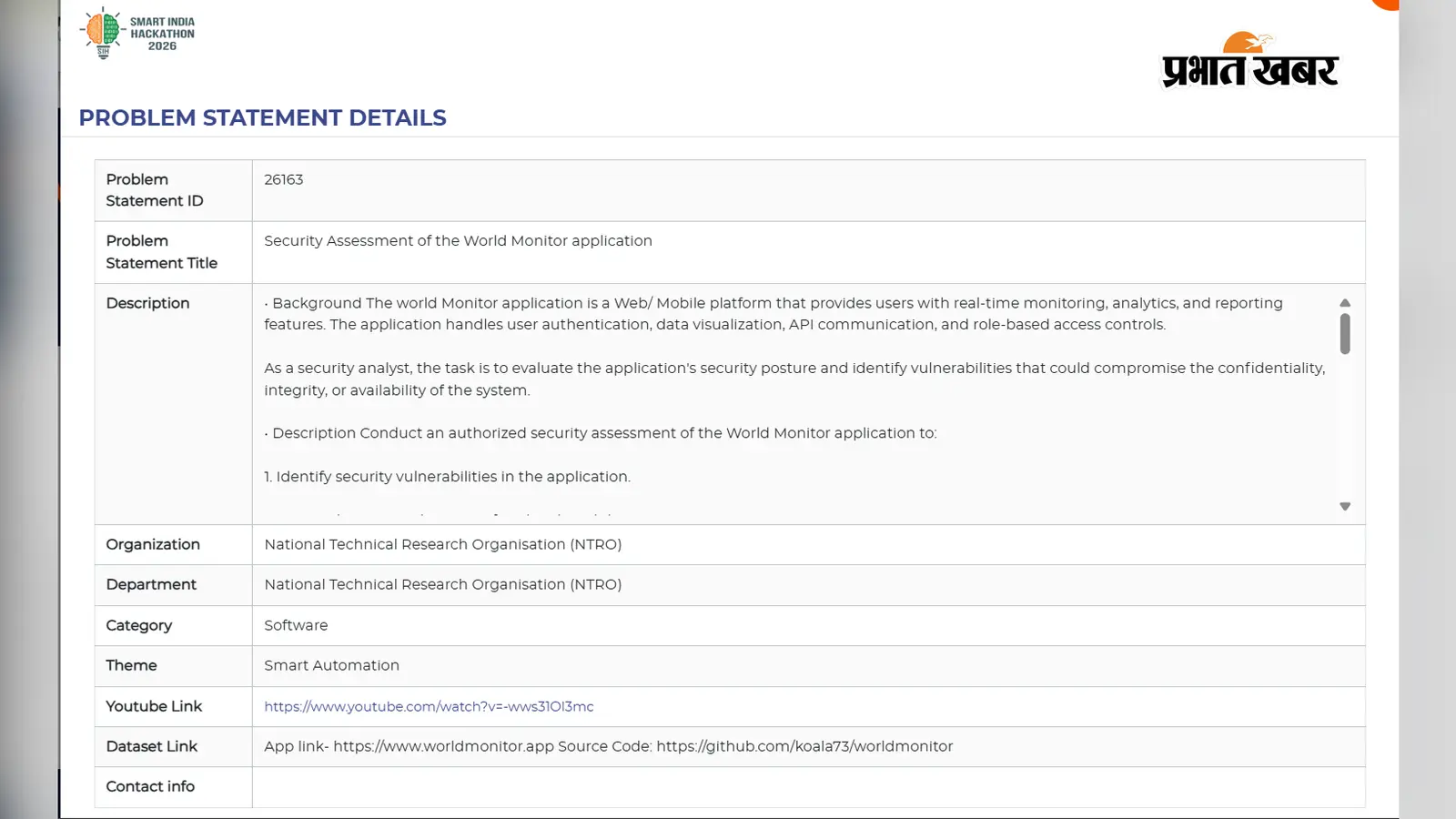
Smart India Hackathon (SIH) 2026 में cybersecurity से जुड़े कई problem statements शामिल किए गए हैं। इनमें Problem Statement 26163, “Security Assessment” विशेष रूप से एक मौजूदा application की security testing पर केंद्रित है।
इस challenge में छात्रों को World Monitor एप्लिकेशन की security assessment करनी है। World Monitor को Elie Habib ने विकसित किया है। Problem Statement में application की संभावित vulnerabilities की पहचान करने, उनके Proof of Concept (PoC) तैयार करने, vulnerabilities को CVSS के आधार पर score करने और उनके remediation की recommendation देने जैसे tasks शामिल हैं।
यह cybersecurity students के लिए एक practical security testing exercise जरूर हो सकती है। हालांकि, SIH जैसे national-level innovation hackathon के संदर्भ में यह सवाल महत्वपूर्ण हो जाता है कि क्या किसी existing application की security assessment को एक innovation challenge के रूप में रखा जाना चाहिए?
VAPT से कितना अलग है यह challenge?
Vulnerability discovery, PoC development, severity assessment और remediation किसी professional Vulnerability Assessment and Penetration Testing (VAPT) process के सामान्य हिस्से हैं।
एक penetration tester या security researcher किसी application को test करता है, vulnerabilities identify करता है, उन्हें reproduce करने के लिए PoC तैयार करता है, severity निर्धारित करता है और developer को remediation सुझाता है।
Problem Statement 26163 में बताए गए प्रमुख tasks भी इसी workflow से काफी हद तक मेल खाते हैं।
ऐसे में challenge का मुख्य सवाल यह बनता है कि इसमें students के लिए नया technology या innovation component क्या है?
अगर challenge का outcome एक security assessment report तक सीमित रहता है, तो यह एक useful cybersecurity exercise हो सकती है। लेकिन इसे national-level innovation challenge बनाने के लिए इसके outcome को एक reusable technology या platform तक ले जाना अधिक प्रभावी हो सकता है।
भारत की cybersecurity जरूरतें कितनी बड़ी हैं?
भारत में digital infrastructure के तेजी से विस्तार के साथ cybersecurity भी एक महत्वपूर्ण national security concern बन चुका है। Ransomware, data breaches, critical infrastructure attacks, supply-chain compromises और sophisticated cyber threats जैसी चुनौतियां organisations और government systems के लिए लगातार महत्वपूर्ण बनी हुई हैं।
ऐसे environment में national-level student hackathon से यह उम्मीद की जा सकती है कि students ऐसी technologies विकसित करें जिन्हें बड़े स्तर पर deploy किया जा सके।
यहीं Problem Statement 26163 को लेकर एक बुनियादी सवाल सामने आता है:
World Monitor की security assessment के बाद भारत को कौन-सी नई cybersecurity capability मिलेगी?
क्या students द्वारा तैयार किया गया solution केवल इसी application तक सीमित रहेगा, या इसे अन्य applications और systems पर भी इस्तेमाल किया जा सकेगा?
NTRO से जुड़ा होना क्या पर्याप्त है?
Problem Statement 26163 को National Technical Research Organisation (NTRO) से जोड़ा गया है।
NTRO का cybersecurity और national security से जुड़ा होना इस challenge को महत्वपूर्ण context देता है। लेकिन किसी national security organisation का problem statement से जुड़ा होना अपने आप यह साबित नहीं करता कि challenge का outcome national-level innovation होगा।
इसके लिए यह देखना जरूरी है कि students से विकसित होने वाली technology का वास्तविक उपयोग क्या होगा और क्या वह challenge के बाद भी भारत के लिए उपयोगी रह सकती है।
Security Assessment को national capability में बदला जा सकता है
इसी problem को एक बड़े technology challenge के रूप में भी देखा जा सकता है। उदाहरण के लिए students से ऐसा automated security assessment platform बनाने को कहा जा सकता है जो अलग-अलग applications की security testing को automate कर सके।
ऐसे platform में automated vulnerability discovery, attack-path analysis, risk prioritisation, CVSS scoring, PoC validation और remediation recommendations जैसी capabilities शामिल की जा सकती हैं।
इस तरह challenge किसी एक application की security testing तक सीमित नहीं रहेगा और एक ऐसी reusable cybersecurity technology तैयार हो सकती है जिसे government systems, critical infrastructure और अन्य Indian digital platforms पर इस्तेमाल किया जा सके।
SIH में innovation का सवाल क्यों महत्वपूर्ण है?
Smart India Hackathon का उद्देश्य students को real-world problems पर काम करने और innovative solutions विकसित करने का अवसर देना है।
इसलिए cybersecurity challenges में केवल vulnerability खोजने के बजाय students को ऐसी technology विकसित करने की दिशा देना अधिक महत्वपूर्ण हो सकता है, जो वास्तविक deployment के योग्य हो।
Problem Statement 26163 के मामले में security assessment निश्चित रूप से एक महत्वपूर्ण cybersecurity activity है। लेकिन security testing और national-level innovation के बीच की सीमा इस challenge को लेकर सबसे महत्वपूर्ण चर्चा का विषय बनती है।
आखिर सवाल यह है कि जब भारत के सामने बड़े पैमाने पर cyber threats मौजूद हैं, तो national-level hackathon में students से केवल एक existing application की vulnerabilities खोजने को कहा जाना कितना प्रभावी है।
क्या SIH में students को existing systems में bugs खोजने की चुनौती मिलनी चाहिए, या उन्हें ऐसी cybersecurity technologies बनाने की चुनौती दी जानी चाहिए जिन्हें भारत बड़े पैमाने पर deploy कर सके?
SIH 2026 का Problem Statement 26163 क्या है? ▼
Problem Statement 26163 का नाम “Security Assessment” है। इसमें World Monitor एप्लिकेशन की security assessment करना, vulnerabilities ढूंढना, PoC तैयार करना, CVSS score देना और remediation सुझाना शामिल है।
Problem Statement 26163 को लेकर सवाल क्या है? ▼
मुख्य सवाल यह है कि क्या किसी existing application की security assessment, जो काफी हद तक VAPT exercise जैसी है, Smart India Hackathon जैसे national-level innovation platform के लिए पर्याप्त innovation और national impact रखती है।
यह भी पढ़ें: GPT-6 Astra vs GPT-5.6 Sol: क्या बदला? Reasoning, Coding और Cybersecurity में कितना बड़ा अंतर